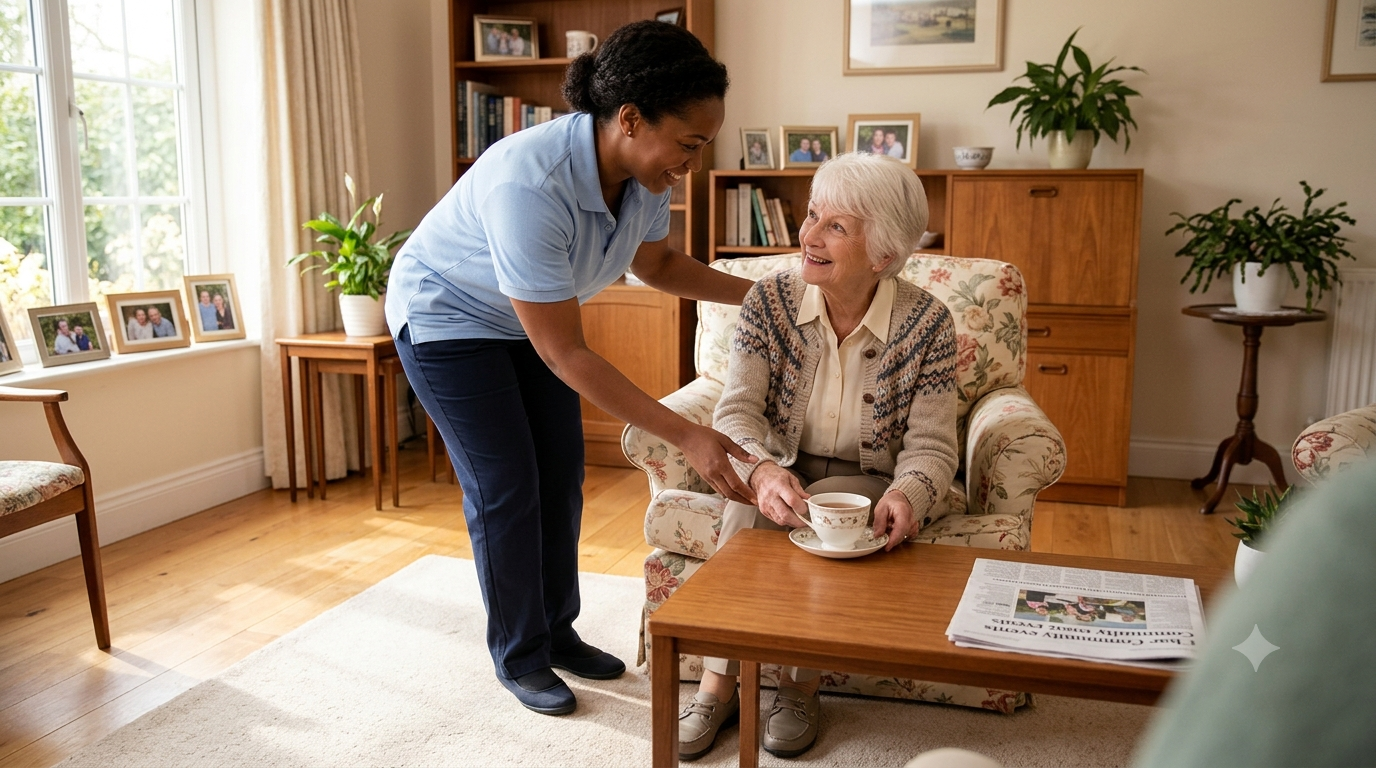
Growing older shouldn’t mean giving up control over your own life. In AARP’s most recent Home and Community Preferences Survey, 75% of adults 50 and older said they want to remain in their current home as they age, and 73% want to stay in their community. Wanting to age in place and being able to do it safely are two different things.
That gap shows up most clearly in personal care. Getting help with bathing, dressing, or moving around can feel like a blow to someone’s pride. “I don’t need a babysitter,” one client’s father told his daughter the first week a caregiver came by.
That tension between needing help and wanting independence sits at the heart of personal care at home. Done well, in-home personal care doesn’t strip away autonomy. It protects it, letting seniors stay in familiar surroundings while getting the support they actually need.
What Is Personal Care at Home?
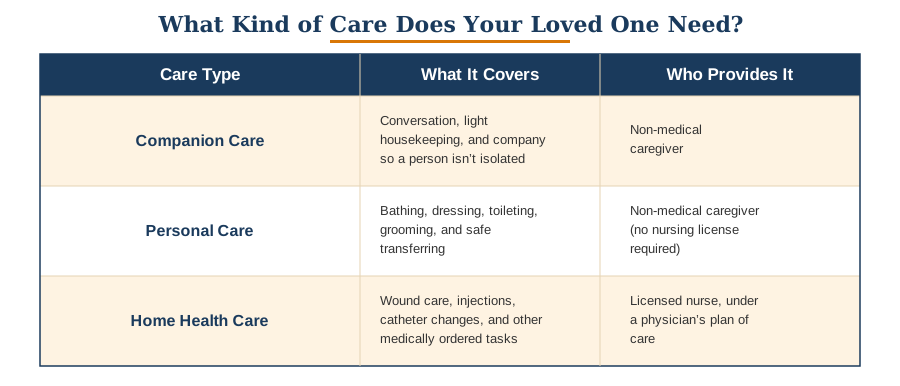
People mix this up constantly, and it’s an easy mistake to make. Personal care at home is non-medical support with the basics of daily living: bathing, grooming, toileting, dressing, and getting around the house safely. It’s different from home health care, which involves licensed nurses or therapists performing medically ordered tasks like wound care or physical therapy under a physician’s plan of care.
Personal Care vs. Home Health Care vs. Companion Care
Companion care sits at one end of the spectrum. That’s conversation, light housekeeping, and simply having someone around so a person isn’t isolated all day.
Personal care sits in the middle and gets hands-on. Think helping someone in and out of the shower, buttoning a shirt when arthritis makes it difficult, or transferring safely from a bed to a wheelchair without a fall.
Home health care sits at the other end. It’s medically ordered care like wound care, injections, or catheter changes, delivered by a licensed nurse under a physician’s plan. Because personal care is non-medical, a nursing license isn’t required for the caregiver, which makes it a more accessible starting point for many families.
Who Typically Needs Personal Care at Home?
The people who need this kind of help aren’t just seniors. Adults recovering from a hip or knee replacement often can’t bend far enough to put on their own socks for six weeks after surgery, so daily help with dressing becomes essential. Adults with multiple sclerosis, Parkinson’s disease, or a stroke history often need this kind of assistance too, sometimes temporarily and sometimes for the long haul.
If your loved one mainly needs help with the ADLs, meaning activities of daily living such as bathing, dressing, eating, transferring, toileting, and continence, personal care at home is usually the right fit. If they need injections, catheter changes, or post-op wound monitoring, that’s home health care, typically ordered by a physician.
Knowing which category applies saves a lot of headache down the road. It’s the difference between a Medicare-covered service and one families often pay for directly, so getting the label right early makes planning easier.
Why Dignity Matters in Caregiving
The emotional side of this is heavier than most people expect going in. Needing help with something as private as bathing or toileting can feel humiliating for an adult who has managed it independently for 60, 70, or 80 years. It’s not just physical vulnerability. For a lot of people, it’s a loss of identity.
A caregiver once described the job as “helping someone keep their story straight,” meaning the person is still the same capable adult they always were. They just need an extra hand now. That framing matters more than people realize.
What Does Dignity-Chipping Care Look Like?
A caregiver who insisted on doing everything for a 78-year-old client, right down to brushing her teeth, made that client feel like a toddler instead of an adult. When the agency swapped in someone who handed her the toothbrush and simply stood by for balance support, everything changed. It was a small shift with a huge difference in how she felt about herself.
Watch for caregivers talking about the client instead of to them, especially in front of family. Watch for care that happens on the caregiver’s schedule instead of the client’s preference, like bathing at 7 a.m. because it’s convenient for staff rather than because the client wants it then. Watch, too, for an overly simplified or child-like tone of voice, which can undermine an adult’s sense of dignity even when it isn’t intended that way.
What Does Respectful, Consent-Based Care Sound Like?
Respectful care sounds like, “Is now a good time for your shower, or would you rather wait until after lunch?” It looks like knocking before entering a bedroom, even if the door is cracked open. It includes asking permission before touching someone, every single visit, not just the first one.
There’s research behind this too. A body of studies on person-centered care in home and residential settings consistently links dignity-preserving practices to reduced depressive symptoms and better psychosocial wellbeing. At least one meta-analysis found it also improves health-related quality of life and reduces hospital admissions compared with standard care, so it isn’t just a nice-to-have.
One family chose an agency based on price alone. The caregiver was efficient and always on time, but the client began refusing care within two weeks because she felt rushed and unheard. Efficiency isn’t the same as good care, and the extra five minutes spent letting someone choose their own outfit often matters more than shaving time off a visit.
Small Habits That Preserve Big Independence
Anyone can talk about dignity in the abstract. The real test is in the daily habits.
- Start with choices. Letting a client pick their own outfit, even if the caregiver would have paired something differently, is a small act that adds up. The same goes for meal timing: if someone has always eaten dinner at 6 p.m., don’t shift it to 5 for staff convenience.
- Use adaptive tools. A grab bar in the shower, a raised toilet seat, a button hook, and a long-handled shoehorn all let someone do more on their own. Clients can go from needing full assistance dressing to doing most of it themselves within a few weeks of introducing the right tools.
- Resist the urge to do it faster. Buttoning a shirt takes a caregiver ten seconds; it might take a client with early Parkinson’s five minutes. Letting them work through it safely, without rushing, preserves fine motor skills and keeps their sense of capability intact.
- Involve family carefully. Bring family into care planning meetings, but don’t let the conversation happen entirely over the client’s head. Adult children discussing a parent’s care needs in the room without ever turning to ask the parent what they want is a fast way to make someone feel like property instead of a person.
A few concrete habits tend to work well across the board. Announce what’s about to happen before doing it, such as “I’m going to help you stand up now.” Offer two options instead of open-ended questions when decision fatigue is a factor, like “Do you want the blue shirt or the green one?” and build in a few extra minutes per task so nothing feels rushed.
These are small habits individually. In practice, they’re the difference between a client who looks forward to their caregiver’s visit and one who dreads it.
How Do You Choose the Right Personal Care Provider?
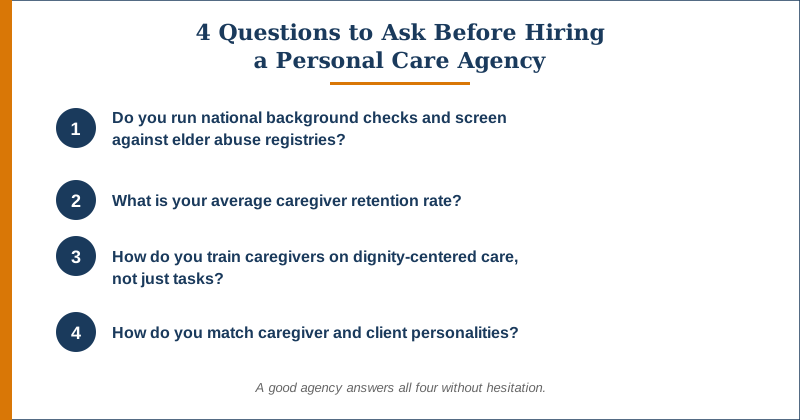
Picking an agency is one of the more stressful parts of this whole process, so it helps to get practical. A useful first question for any agency is how they train caregivers on dignity-centered care specifically, not just task completion. Many agencies will talk about CPR certification and background checks, which matter, but skip right past the soft-skills training that actually determines day-to-day quality of life.
Always confirm the agency runs a national criminal background check, not just a state-level one, plus checks against elder abuse registries. Ask if caregivers are bonded and insured. If an agency hesitates or gets vague on this question, that’s a red flag worth taking seriously.
Red Flags to Watch For
High caregiver turnover is one, so ask directly what the agency’s average caregiver retention rate looks like. No consistent point of contact for care plan questions is another. Reluctance to let you meet the caregiver before the first shift is a third, since a good agency wants the match to work and will facilitate an introduction.
Matching personality matters more than people expect. Technically excellent caregivers can still fail with certain clients purely because of mismatched energy, like a quiet, reserved client paired with an overly chatty caregiver. Ask the agency how they handle personality matching, not just skills matching.
Cost is often a deciding factor, and it’s worth exploring every avenue before ruling personal care out. Medicaid may cover it through Home and Community-Based Services waivers for those who qualify, though rules and waiting lists vary a lot by state, so it’s worth calling your state Medicaid office directly. Long-term care insurance and VA Aid and Attendance benefits for wartime veterans can also help offset the cost, and both get overlooked constantly, so it’s worth asking a benefits counselor or elder law attorney what your family qualifies for.
How Do You Know When It’s Time for Personal Care Support?
Families often wait too long to bring in help, usually because nobody wants to be the one to suggest it. A few signals tend to show up before anyone says anything out loud.
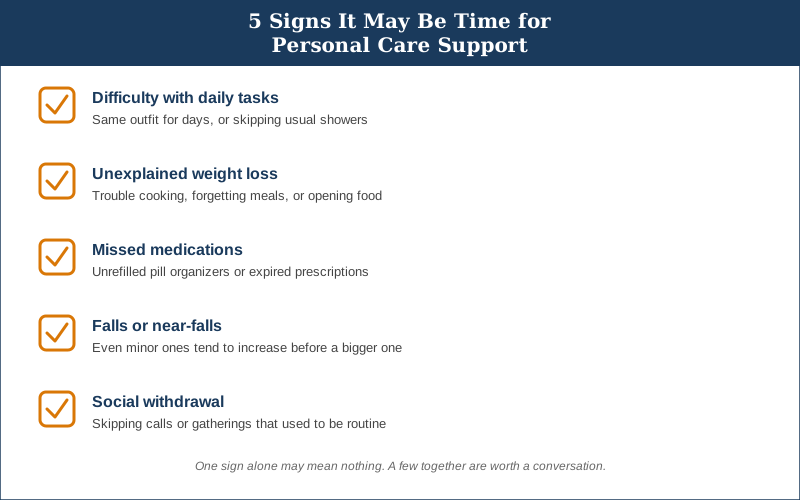
Watch for difficulty with the ADLs: bathing, dressing, toileting, eating, and transferring. Wearing the same outfit for several days in a row, or skipping showers that used to be routine, is often an early sign rather than just forgetfulness.
Unexplained weight loss is a big one caregivers flag constantly. It usually means someone is struggling to cook for themselves, forgetting to eat, or having trouble opening jars and packaging. Poor hygiene and a home that’s started smelling different than it used to are also worth paying attention to.
Missed medications show up in subtle ways, like pill organizers that aren’t refilled on schedule, prescriptions that haven’t been picked up, or a medicine cabinet with expired bottles nobody has noticed. Falls or near-falls, even ones that seem minor, tend to increase in frequency before a bigger incident happens.
Social withdrawal deserves attention too. If someone who used to call friends regularly or attend church every week suddenly stops, it’s not always just aging. It can be depression tied to loss of independence, or embarrassment about needing help they haven’t told anyone about yet.
Building a Care Plan That Respects Autonomy
The best care plans start with the person, not the diagnosis. Sit down with your loved one before anything gets finalized and ask what matters most to them day to day. Maybe it’s keeping their Tuesday coffee date. Maybe it’s being able to garden even if someone needs to stand nearby for balance.
Flexible routines beat rigid ones every time. A schedule that says bathing happens between 8 and 10 a.m., whenever works for the client, respects autonomy a lot more than one locked to 8 a.m. sharp regardless of how the person is feeling that day.
Reassess regularly too, since needs change, sometimes fast. A care plan built six months ago might not reflect where someone is now, especially after a fall or hospitalization. Build in a review every 60 to 90 days at minimum.
Finally, write preferences down and keep them consistent across every caregiver who touches the case. If the client prefers showers over baths, or likes their coffee a certain way, or wants the radio on during morning care, that information should travel with the case file so nobody has to re-explain their own preferences every time a new caregiver shows up.
Conclusion
Personal care at home works best when it’s built around the person, not just their diagnosis or limitations. Independence isn’t about doing everything alone. It’s about having a say.
Small choices, like picking out a sweater or deciding when to take a walk, add up to a life that still feels like one’s own. If you’re weighing options for a parent or loved one, start with a conversation about what matters most to them, then find a care provider, like B’zoe Care, that treats that conversation as the foundation rather than an afterthought.