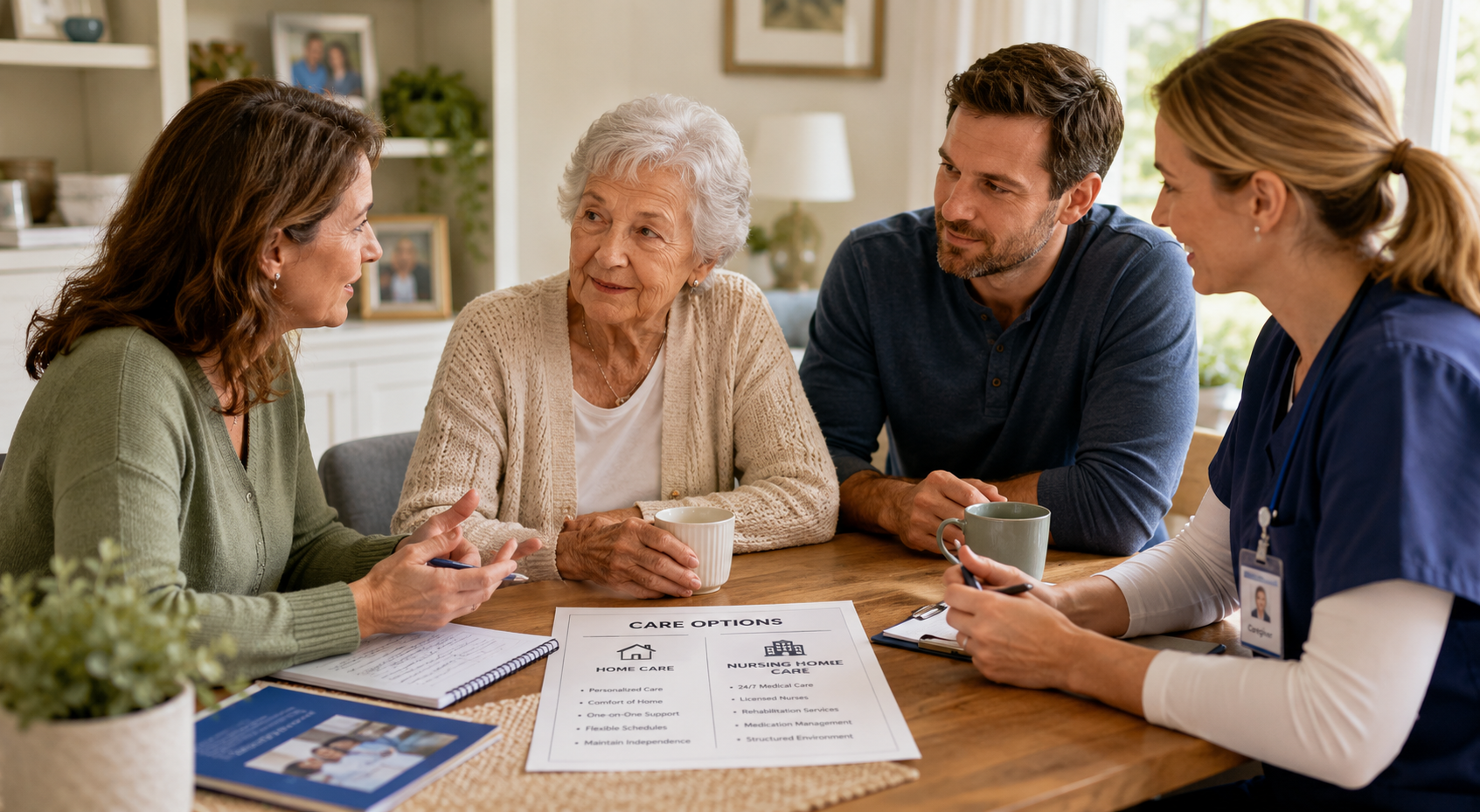
Nearly 70 percent of adults who survive to age 65 will develop a significant need for long-term care before they die, according to the U.S. Department of Health and Human Services. That number is striking. What it cannot capture is the weight of the moment when a family actually faces that reality.
The conversation usually starts quietly. A fall. A few missed medications. A neighbor calling to say something seemed off. And suddenly, families find themselves researching options they never expected to need this soon.
Home care or a nursing home. Two very different paths. Each carrying its own implications for the person you love. This guide is designed to help families think through both options clearly, from quality of life and medical fit to the emotional dynamics that shape these decisions.
What Is the Difference Between Home Care and Nursing Home Care?
Before comparing the two, it helps to be clear about what each actually means. The terms get used loosely, and that creates real confusion for families trying to make an informed decision.
Home Care: Personalized Support in a Familiar Place
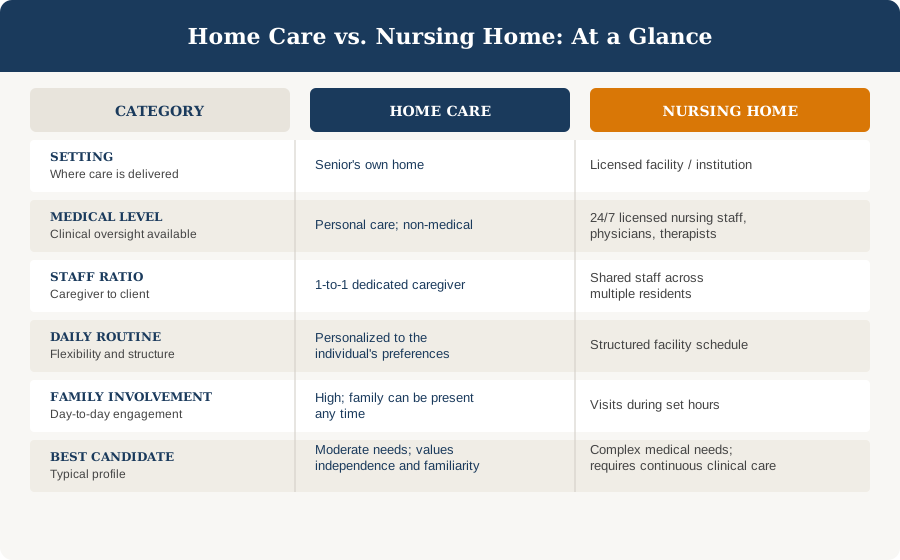
Home care refers to professional caregiving services delivered in the senior’s own home. It can range from a few hours of companion care a week to full-time live-in or round-the-clock support for seniors who need continuous help. Most home care is non-medical, meaning caregivers assist with activities of daily living such as bathing, dressing, meal preparation, and mobility rather than performing clinical procedures.
That said, home care agencies often work alongside a senior’s medical providers, and some offer more specialized support for conditions like dementia. The level of one-on-one attention is built into the model by definition.
Nursing Home Care: Clinical Support in an Institutional Setting
Nursing home care, more formally called a skilled nursing facility (SNF), is institutional care designed for individuals with significant medical needs. Residents live at the facility full-time and have access to licensed nurses, therapists, and physicians around the clock. The level of clinical oversight is higher than what in-home care provides.
The tradeoff is real: a nursing home is not someone’s home. It is a medical environment, and for many seniors, that distinction matters enormously.
What Falls Between These Two Options?
Between home care and nursing home care lies a spectrum. Assisted living communities, memory care facilities, adult day programs, and residential care homes each occupy different positions on it. This guide focuses specifically on the comparison families most commonly face: professional in-home care versus traditional nursing home placement.
One thing worth noting early: many families arrive at this decision already leaning toward a nursing home, not because it is the best clinical fit, but because it is the most familiar option. According to AARP’s 2024 Home and Community Preferences Survey, 75 percent of adults 50 and older want to remain in their current homes as they age. The gap between what seniors want and what families default to is worth examining honestly.
Quality of Life: What Does the Research Actually Show?
Quality of life is not a soft consideration. It is one of the most consequential factors in long-term health outcomes for older adults. The research on this topic is fairly consistent.
Do Seniors Do Better at Home?
Studies comparing seniors who receive care at home with those in institutional settings generally find that home-based care is associated with higher reported life satisfaction, greater sense of autonomy, and lower rates of depression. Part of what drives this is the role of familiar environments.
For most people, home is not just a physical space. It is where routines live, where memories are stored, where a person feels a sense of control over their surroundings. Losing that, especially for someone already navigating the physical and cognitive changes of aging, can accelerate decline.
The Loneliness Risk in Institutional Settings
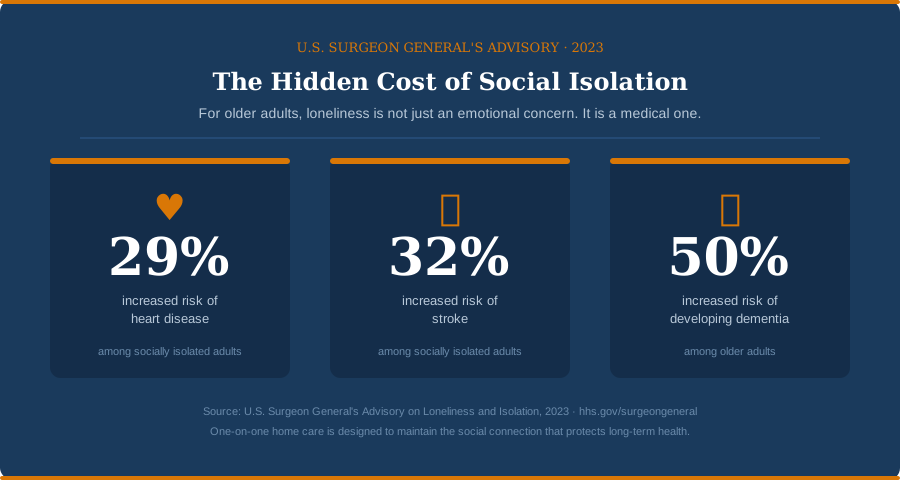
Isolation is one of the most underappreciated risks in nursing home settings. The U.S. Surgeon General’s 2023 advisory on loneliness and isolation found that poor social connection is associated with a 29 percent increased risk of heart disease, a 32 percent increased risk of stroke, and a 50 percent increased risk of developing dementia in older adults.
Nursing homes vary enormously in their social programming, but the structural reality of communal institutional living does not automatically protect against isolation. Some residents thrive in that environment, particularly those who are naturally social and enjoy a robust activity calendar. Others find it deeply alienating.
Home care, by contrast, delivers one-on-one attention by design. A caregiver who comes each day builds a relationship with the person they support, learns their preferences, their history, their sense of humor. That continuity has real value, both emotionally and practically.
The Dementia Case for Staying Home
For seniors in the early to moderate stages of dementia, familiar environments, consistent routines, and one-on-one attention from a known caregiver can meaningfully slow the behavioral symptoms that often lead families to consider facility placement. Cognitive function is closely tied to environmental familiarity, and disrupting both simultaneously can accelerate decline.
It would be dishonest to present this as entirely one-sided. Some seniors genuinely do better in a structured facility environment, particularly those whose home situation has become unsafe. The point is that quality of life considerations consistently favor home-based care when it is a viable option.
When Is a Nursing Home the Right Choice?
There are genuine situations where nursing home placement is the appropriate decision, and families should feel clear-eyed about that rather than guilty. Choosing a nursing home for the right reasons is an act of love, not failure.
Situations That May Require Skilled Nursing Facility Care
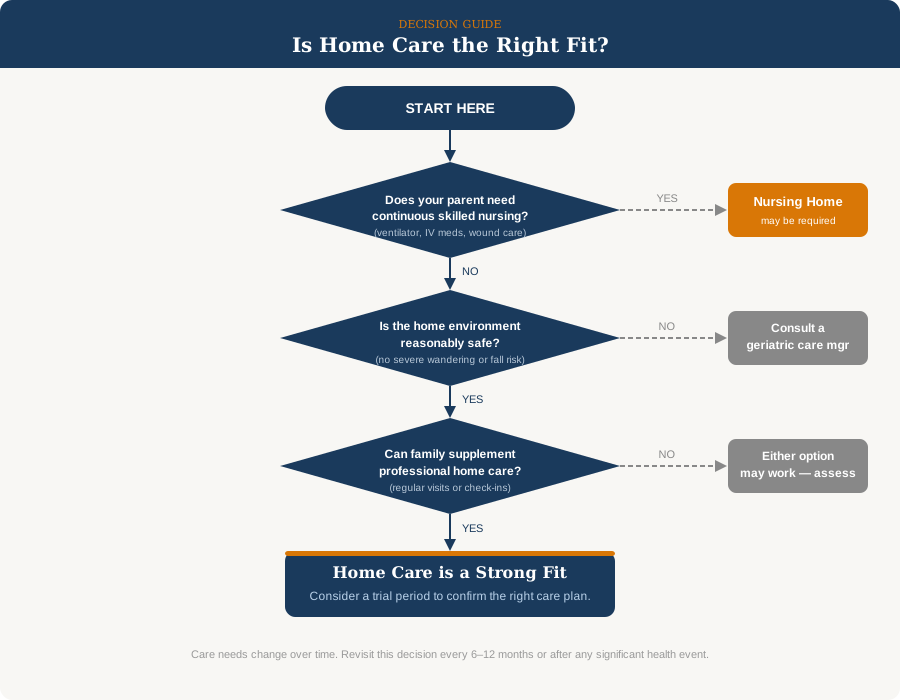
The clearest cases involve medical complexity that exceeds what home care can safely provide. Seniors who require continuous skilled nursing interventions, such as ventilator management, complex wound care, intravenous medications, or frequent clinical monitoring, need a level of medical infrastructure that a home setting simply cannot replicate.
Advanced dementia with severe behavioral symptoms is another situation where home placement can become untenable. Wandering, aggressive behavior, and extreme sleep disruption can reach a point where safety cannot be maintained, even with professional caregivers. This is a reflection of the disease’s progression, not anyone’s failure.
Short-Term Rehab Is Different From Long-Term Placement
Nursing homes also play an important short-term role. Following a hospitalization, many seniors spend time in a skilled nursing facility for rehabilitation before returning home. This is different from long-term placement. Families should understand the distinction, because short-term SNF rehab is often entirely appropriate and does not preclude a return to home-based care.
When Caregiver Burnout Becomes a Factor
Caregiver burnout is a legitimate consideration. When a family caregiver has reached a point of crisis and professional in-home care cannot adequately fill the gap, whether due to care intensity, financial constraints, or geography, nursing home placement may be the most sustainable path forward.
Caregiver burnout is real, it is serious, and it affects the quality of care a senior receives. Acknowledging it honestly is part of making a good decision.
When Home Care Is the Better Fit
For many families, professional in-home care is not just a reasonable option. It is the better one. Here is when it tends to be the clearest fit.
Who Is a Strong Candidate for In-Home Care?
Seniors with moderate care needs who value their independence and familiar surroundings are strong candidates. This includes individuals who need help with activities of daily living such as bathing, dressing, meal preparation, and transportation, but who do not require continuous skilled nursing. The majority of seniors who need support fall into this category.
Home care is also a strong fit when family involvement is important to the care plan. Families who want to remain actively engaged in their loved one’s daily life often find that home care supports that involvement far more naturally than a nursing home setting does.
Why Post-Hospital Discharge Is a Critical Window
The transition home after surgery or a significant health event is one of the highest-risk periods for older adults. Medication errors, falls, missed follow-up appointments, and failure to recognize warning signs of complications are all more likely when a senior returns home without adequate support. A professional caregiver during that recovery window is not a luxury. It is a practical safety measure.
An Incremental Approach That Preserves Dignity
One of in-home care’s most underappreciated advantages is that it can be introduced gradually. A few hours a week to start. A familiar face who earns trust over time. An arrangement that keeps the senior in their own space, on their own terms. This incremental approach is something nursing home placement simply cannot offer.
Many memory care specialists recommend keeping individuals with early-stage dementia at home for as long as it can be done safely, precisely because familiar environments preserve cognitive function in ways institutional settings cannot replicate.
The Emotional Dimension: Guilt, Resistance, and Family Dynamics
It would be a disservice to discuss this decision as though it were purely clinical. The emotional dimension is enormous, and ignoring it does not make it easier to navigate.
Why Guilt Is Nearly Universal
Adult children almost universally report feeling guilty regardless of which path they choose. Those who pursue home care worry they are not doing enough. Those who choose a nursing home worry they have abandoned the person they love. Naming this directly is the first step toward moving through it productively.
What matters is not which option eliminates guilt, because neither will. What matters is that the decision is made from a place of knowledge rather than fear or default.
Understanding Why Seniors Resist Care
Most seniors who resist care are not being irrational. They are responding to very real fears: loss of control, loss of privacy, loss of the routines that give their days structure and meaning. Being moved to a nursing home concentrates all of those losses into a single event. In-home care, by contrast, can be introduced incrementally, which gives seniors the experience of receiving support without surrendering their sense of home.
When Families Are at an Impasse
A few things tend to help when families are stuck. Holding a family meeting that explicitly includes the senior, not just talks about them, and invites their preferences into the conversation is a strong starting point. A geriatric care manager, a licensed professional who specializes in aging-related assessments and care planning, can serve as a neutral third party who helps families move from conflict to clarity.
In many cases, a trial period of home care resolves the disagreement more effectively than any conversation ever could. Real-world experience is data that research cannot substitute for.
A Practical Decision-Making Framework for Families
When the emotional weight of this decision makes it hard to think clearly, a structured set of questions helps. These are a starting point, not a formula.
- What level of medical care does the parent actually require? Is it skilled nursing, or is it personal care and support with daily activities? Many families overestimate clinical need, which leads them toward facility care when home care would be appropriate.
- What does the parent prefer? Their preference may not be the deciding factor, but it deserves real weight. Research is consistent that seniors who have some agency over their care situation do better, regardless of setting.
- Is there a family caregiver who can supplement professional home care? Home care works best as part of a team. If family members can be present part of the time, the overall coverage picture improves significantly.
- Has home care genuinely been evaluated? Or is the family defaulting to a nursing home because it is the most familiar option? This question is worth sitting with honestly.
- What does the primary care physician recommend? A doctor who knows the patient well is a valuable voice in this conversation, and involving them early avoids making a major decision in an information vacuum.
- Has a geriatric care manager been consulted? For families who are overwhelmed, a geriatric care manager can conduct a thorough in-home assessment and provide a professional recommendation grounded in the specific person’s situation.
A few additional principles worth holding: care needs change over time, and no decision made today is necessarily permanent. Starting with home care does not foreclose the option of a nursing home later if circumstances change. Revisiting the care plan every six to twelve months, or after any significant health event, is good practice.
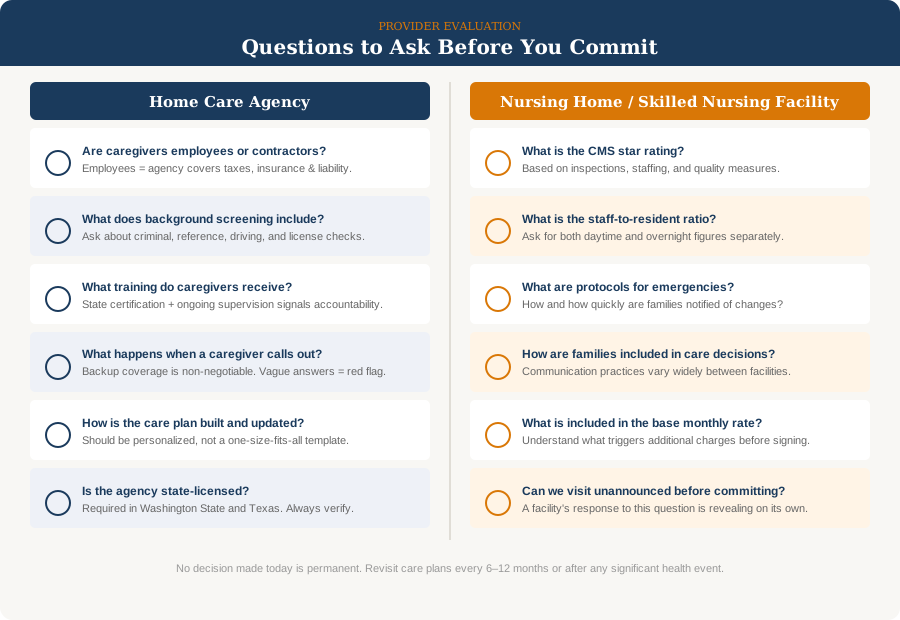
Questions to Ask When Evaluating Providers
Once a family has a direction, the next step is evaluating specific options. The quality of providers varies significantly, and asking the right questions upfront saves a great deal of difficulty later.
For a Home Care Agency
- Are caregivers employees or independent contractors? Employee-based agencies handle payroll taxes, workers’ compensation, and liability insurance on behalf of clients. That distinction matters.
- What does the background screening process include? Ask specifically: criminal background checks, reference checks, driving record, and any professional license verification.
- What training do caregivers receive, and is there ongoing supervision? State-certified training is a baseline, but ongoing supervision and performance standards indicate a culture of accountability.
- What happens when a scheduled caregiver calls out sick? Backup coverage is one of the most important operational questions to ask. An agency that cannot answer it clearly is one to be cautious about.
- How is the care plan developed, and how often is it updated? A good care plan is built around the individual’s specific needs, not a generic template.
- Is the agency licensed by the state? In Washington State and Texas, home care agencies are required to hold a state license. Verify it.
For a Nursing Home
- What is the facility’s CMS star rating? The Centers for Medicare and Medicaid Services publishes five-star ratings for nursing homes based on health inspections, staffing levels, and quality measures. It is an imperfect system but a useful starting point.
- What is the staff-to-resident ratio during the day and overnight? Staffing levels have a direct relationship to the quality of care residents receive.
- What are the protocols for medical emergencies and hospital transfers? Ask specifically about how families are notified.
- How are family members kept informed and included in care decisions? Communication practices vary widely and are worth understanding before placement.
- What does the monthly base rate include, and what services trigger additional charges? Understanding the financial structure of the arrangement avoids surprises later.
Making the Decision With Confidence
There is no version of this decision that is without difficulty. It involves real trade-offs, real emotions, and real uncertainty about what the future holds. That is the nature of it.
What families can control is how well-informed they are going in. The evidence is fairly clear: when in-home care is a viable option, most seniors prefer it, and many do better in measurable ways. That does not mean it is the right answer in every case. It means it deserves a genuine evaluation rather than being dismissed before the conversation starts.
Whatever path a family chooses, making that choice from a place of knowledge rather than default is the goal. Talk to the parent. Talk to the doctor. Ask hard questions of the providers being considered. And give the decision the time and attention it deserves.