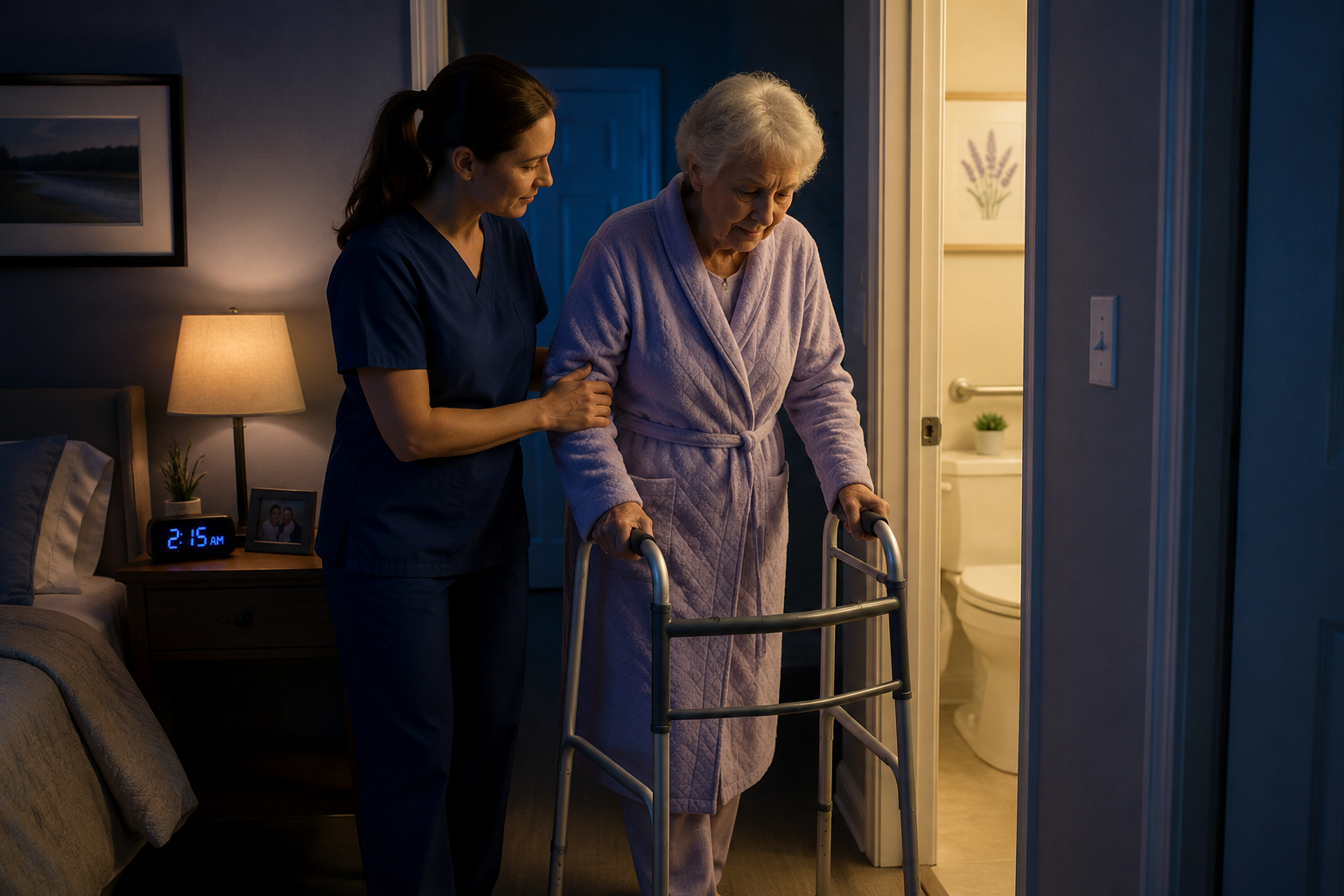
Nighttime is often when the hardest caregiving moments happen. Nearly 13 million Americans provide unpaid care to a family member or friend with dementia, according to the Alzheimer’s Association 2026 Facts and Figures report, and a significant share of that care happens after dark.
It is not always a dramatic event that signals the need for overnight support. Sometimes it is a pattern: a parent who wanders to the kitchen at 2 a.m., a loved one who fell trying to reach the bathroom, or a family caregiver who has not slept properly in weeks. The signs can be subtle, and that is exactly why families often miss them.
Overnight home care is one of those solutions most families do not think about until a crisis forces the conversation. But planning ahead tends to make the transition far smoother. This article walks through what overnight in-home care actually looks like, the warning signs that point toward its need, the medical conditions most likely to require it, and how to decide what level of support is right for your family.
What Is Overnight In-Home Care for Seniors?
Overnight in-home care provides professional caregiving support during nighttime hours, typically from around 10 p.m. to 8 a.m. Scheduling is flexible and can be adjusted based on your family’s specific needs. Unlike 24-hour or live-in care, overnight care is designed specifically to address the risks and challenges that arise during sleeping hours.
There are two distinct models, and choosing the right one depends almost entirely on how often your loved one needs intervention during the night, and how quickly that intervention needs to happen.
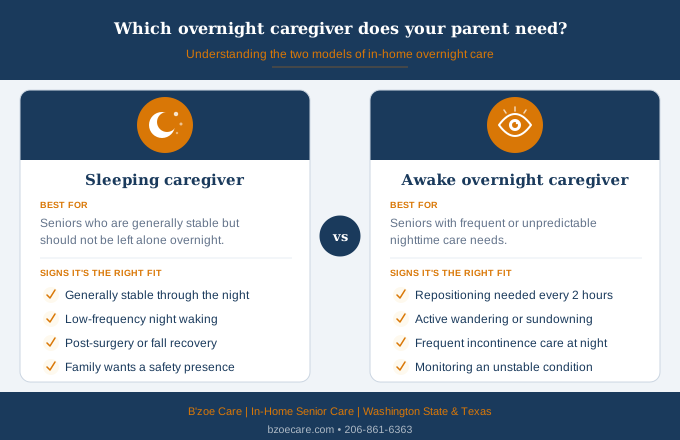
The Sleeping Overnight Caregiver
In this arrangement, the caregiver is present and available to respond if something goes wrong, but is not required to remain awake throughout the night. This model works well for seniors who are mostly stable but should not be left alone. It provides a meaningful safety net for families primarily concerned about falls, brief confusion, or an unexpected medical event.
The Awake Overnight Caregiver
This arrangement requires the caregiver to remain alert and active all night. It is appropriate for seniors who need frequent repositioning, regular incontinence assistance, close supervision due to wandering risk, or monitoring of an unstable medical condition. Awake overnight care is more intensive and is reserved for situations where a sleeping caregiver would not keep the senior safe.
Overnight care can be scheduled for a single night per week or every night. Many families start with a few nights and expand coverage as their loved one’s needs evolve. A good home care agency will work with your family to build a schedule that actually fits.
Is Your Parent Showing These Overnight Safety Warning Signs?
Most families arrive at this decision after something has already gone wrong. A nighttime fall. A confused 3 a.m. phone call. A caregiver running on empty. Recognizing the warning signs before a crisis is a far better position to be in.
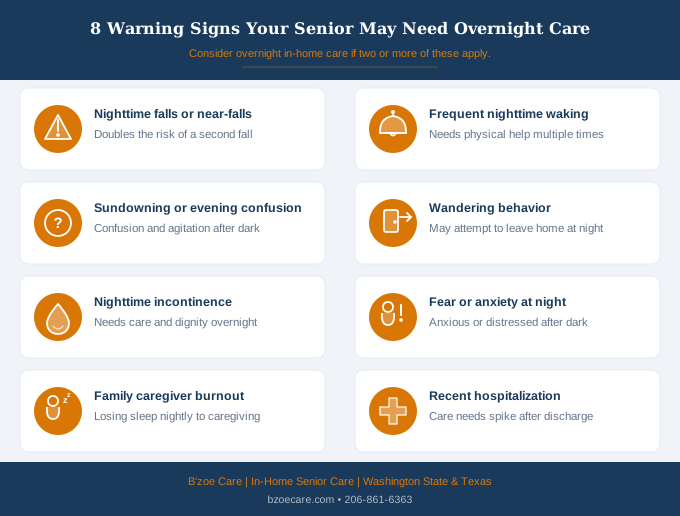
These are the most common indicators that overnight support has become necessary:
- Nighttime falls or near-falls. Falls are the leading cause of injury for Americans over 65, with more than 1 in 4 seniors falling each year. Many of these falls occur during nighttime bathroom trips, when lighting is poor and no one is present to assist. If a loved one has already fallen at night, the risk of another is significantly elevated.
- Frequent nighttime waking that requires physical assistance. Some seniors need help getting out of bed, walking to the bathroom, or returning to a comfortable position multiple times throughout the night. This type of repeated intervention is not sustainable for a family caregiver sharing the same home.
- Sundowning or evening confusion. Many seniors with dementia experience sundowning, a phenomenon in which confusion, agitation, and disorientation intensify in the late afternoon and evening. Sundowning can make nighttime particularly unpredictable and unsafe without someone present.
- Wandering behavior. Seniors with Alzheimer’s or other forms of dementia may attempt to leave the home at night, often without awareness of what they are doing or where they are going. This is one of the most serious safety risks in dementia care and a strong indicator that overnight supervision is needed.
- Nighttime incontinence requiring assistance. Seniors who need help managing incontinence during the night require a caregiver who can respond promptly and with dignity. Without overnight support, this can lead to skin breakdown, infection risk, and significant distress.
- Fear or anxiety about being alone at night. If your loved one frequently calls family members late at night for reassurance, or expresses fear about the overnight hours, these are meaningful emotional signals worth taking seriously.
- A family caregiver who is sleep-deprived or showing signs of burnout. The Alzheimer’s Association reports that 59% of dementia caregivers experience high to very high emotional stress. When a family caregiver is consistently losing sleep to provide nighttime assistance, their physical and emotional reserves erode quickly. Overnight care can restore the rest they need.
- Recent hospitalization or surgery. Hospital discharge often brings a temporary but significant spike in nighttime care requirements, including pain management, medication timing, and limited mobility that increases fall risk during nighttime movement.
None of these signs require waiting for a crisis before acting. If two or more apply to your loved one, overnight care is worth a serious conversation with your family and your loved one’s physician.
Medical Conditions That Most Often Require Overnight Care
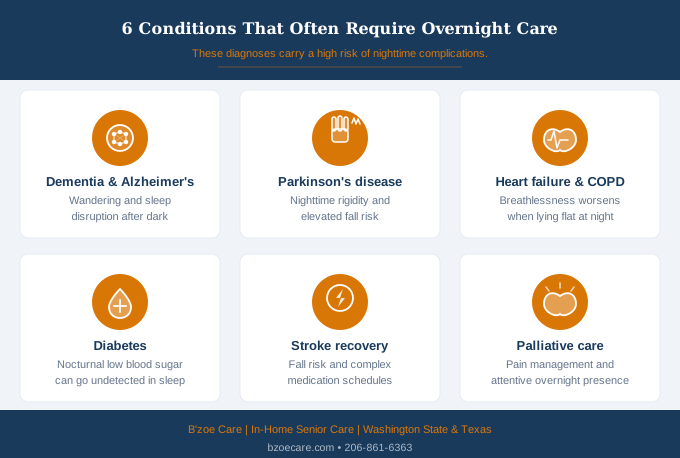
Certain diagnoses carry a high risk of nighttime complications. Families caring for seniors with the following conditions should give serious thought to overnight support, regardless of whether a specific incident has already occurred.
Dementia and Alzheimer’s Disease
Dementia is among the most common drivers of overnight care. Wandering, sundowning, nighttime confusion, and disrupted sleep cycles are all well-documented features of Alzheimer’s and related dementias. As the disease progresses, the nighttime hours become increasingly unpredictable and the risks of leaving a person with dementia unsupervised after dark rise substantially.
Parkinson’s Disease
Parkinson’s causes motor symptoms that do not pause for sleep. Nighttime rigidity, freezing episodes, and difficulty turning in bed can leave seniors stuck in uncomfortable positions and at elevated fall risk when they attempt to rise. Many Parkinson’s patients also experience REM sleep behavior disorder, which can cause them to physically act out dreams in ways that risk injury.
Congestive Heart Failure and COPD
Respiratory conditions often worsen at night. Seniors with congestive heart failure can experience increased shortness of breath when lying flat, a condition known as orthopnea, which disrupts sleep and can signal a change in condition requiring attention. COPD can produce nighttime oxygen desaturation and episodes of breathlessness. Having a caregiver present to monitor these symptoms can be critically important.
Diabetes
Nocturnal hypoglycemia, or low blood sugar during sleep, is a genuine risk for seniors managing diabetes with insulin or certain oral medications. A senior experiencing a hypoglycemic episode while asleep may not wake up, and without someone present, the episode can become dangerous. Overnight caregivers can monitor for symptoms and respond appropriately.
Stroke Recovery
The period following a stroke involves significant physical limitations, potential confusion, and complex medication schedules that may include nighttime doses. Seniors recovering from stroke are at elevated fall risk and may need assistance with positioning, pain management, or responding to unexpected symptoms. Overnight care during the recovery period can be the difference between a safe transition home and a return to the hospital.
Late-Stage Cancer and Palliative Care
For seniors in palliative or hospice care, the nighttime hours can be particularly difficult. Pain management needs, repositioning assistance, and the emotional weight of end-of-life care all make an overnight presence valuable. An overnight caregiver in this context provides not only physical support but also a calming, attentive presence that brings comfort to both the senior and their family.
Sleeping Caregiver or Awake Caregiver: How Do You Know Which One Your Parent Needs?
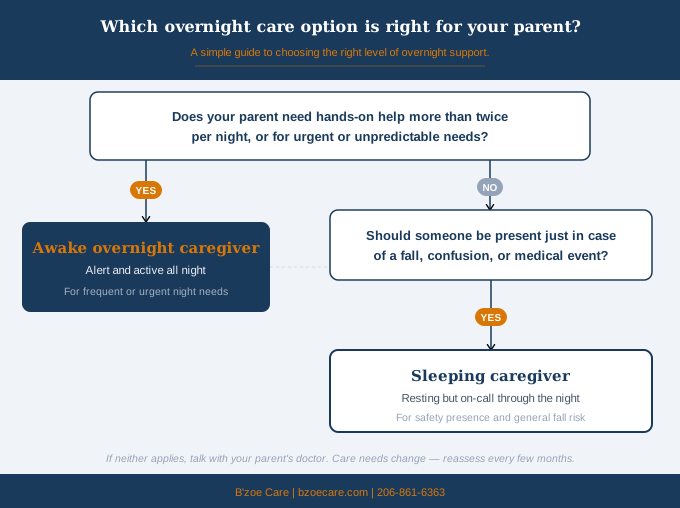
This is the question families ask most often once they have decided overnight care is the right direction. The honest answer is that it depends on how often your loved one needs intervention during the night and how quickly that intervention needs to arrive.
When a Sleeping Caregiver Makes Sense
A sleeping caregiver is appropriate when the senior is generally stable through the night but should not be alone. Think of a senior recovering from a hip replacement who can largely sleep through the night but might need help if they become confused or need to get up. The risk is real but intermittent. Having a caregiver in the home who can be woken up provides meaningful safety without the intensity of an awake overnight arrangement.
When an Awake Caregiver Becomes Necessary
An awake overnight caregiver becomes necessary when the frequency or unpredictability of nighttime needs exceeds what a sleeping caregiver can reasonably manage. This includes seniors who require repositioning every two hours to prevent pressure injuries, those with active wandering behavior, seniors who need incontinence care multiple times per night, and those whose medical conditions require close and consistent monitoring.
If a family caregiver is currently losing sleep every single night to manage these needs, that is a strong signal that an awake overnight caregiver is the appropriate level of care.
Care Needs Change Over Time
A senior who starts out needing only a sleeping caregiver may transition to needing awake overnight support as a condition like dementia or Parkinson’s progresses. Reassessing the arrangement every few months, ideally in conversation with the senior’s physician and home care agency, helps ensure the level of care stays aligned with actual needs.
When in doubt, a needs assessment from a qualified home care agency is the most reliable way to determine the right fit. A good agency will ask detailed questions about nighttime patterns, current medical conditions, fall history, and caregiver capacity before making a recommendation.
Helping Your Loved One Stay Safe After Dark
Overnight care is not a last resort. For many seniors, it is what makes aging in place genuinely sustainable. Falls, wandering, medication errors, and medical emergencies do not follow a schedule, and the nighttime hours carry real risk.
But with the right overnight support in place, seniors can remain safe in their own homes, and family caregivers can finally get the rest they need to keep showing up. If your parent is showing any of the warning signs covered in this article, or if you are a family caregiver running on empty, it may be time to have that conversation.
B’zoe Care provides professional, compassionate overnight care services for seniors throughout Washington State and Texas. Their certified caregivers are carefully matched to each client’s needs, with flexible scheduling options that include both awake and sleeping overnight arrangements. To learn more or get started, visit bzoecare.com or call 206-861-6363.