
Nearly 28% of adults over 65 live alone in the United States. Social isolation among seniors is now considered a public health crisis as serious as smoking 15 cigarettes a day. Yet for many families navigating senior care, the term ‘companion care’ still sounds vague. Something nice, perhaps, but maybe not necessary.
That is a costly misconception.
In-home companion care is one of the most practical, emotionally powerful, and often underutilized forms of senior support available today. For families stretched thin by distance, work, and their own responsibilities, it can be the difference between a parent who is thriving and one who is quietly declining.
This guide breaks down exactly what in-home companion care is, what it includes, who benefits most, and how to know when it might be right for a loved one.
What Is In-Home Companion Care?
In-home companion care is a category of non-medical home care focused on social engagement, emotional support, and light practical assistance. It sits in a distinct category from skilled nursing, physical therapy, and personal care like bathing and dressing. Understanding that distinction matters, both for setting realistic expectations and for understanding how it is funded.
What Makes Companion Care Different from Other Home Care?
The heart of companion care is human connection. A trained companion caregiver provides consistent, reliable presence: to talk, to listen, to accompany, to engage. The research is not subtle. Chronic loneliness in older adults is associated with a 26% increase in premature mortality, according to a widely cited meta-analysis published in Perspectives on Psychological Science.
Companion care is not a replacement for medical care. A companion caregiver does not administer medications, perform wound care, or provide clinical support. The role is closer to a professional, trained, and trusted daily companion.

Reputable agencies employ companion caregivers who have undergone formal training, background checks, and in many states, certification requirements. The distinction between agency-employed caregivers and privately hired individuals carries significant implications for safety, accountability, and reliability.
Many families layer companion care with other home-based services as needs evolve. Companion care is typically the most accessible and affordable entry point. The goal, at its core, is to support a senior’s quality of life in the home they know, preserving independence for as long as possible.
Core Services Included in Companion Care
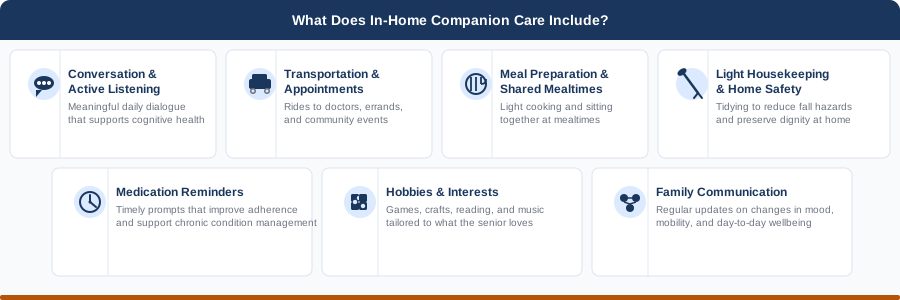
Companion care is not a single service. It is a collection of support activities that together address the full spectrum of day-to-day needs that emerge as seniors age in place. The specific services vary by provider and care plan, but most reputable programs include the following.
Social Engagement and Conversation
Conversation and active listening form the foundation of every companion care relationship. The clinical value of regular, meaningful dialogue for aging adults is well documented. Consistent social interaction reduces cortisol levels, supports cognitive function, and mitigates the depressive symptoms that frequently accompany isolation.
Transportation and Appointment Accompaniment
Getting to a doctor’s appointment, a grocery store, a hair salon, or a community event requires transportation, navigation, and often a second set of hands. For seniors who can no longer drive, or whose families cannot always be available, a companion caregiver fills that role reliably. This is one of the most practically valuable services a companion caregiver provides.
Meal Preparation and Shared Mealtimes
Older adults living alone are significantly more likely to skip meals, eat poorly, and become dehydrated. A companion caregiver can assist with light cooking, help with grocery lists, and sit down to share mealtimes. The social ritual of eating together has measurable effects on how much and how well a person eats.
Light Housekeeping and Safety Maintenance
Dishes, laundry, tidying, and light organization keep the home environment safe and manageable. This is not full housekeeping; the focus is maintaining a clutter-free, functional living space that reduces fall hazards and preserves dignity.
Medication Reminders
There is a meaningful legal and clinical distinction between reminding a senior to take a medication and actually administering it. Companion caregivers provide reminders and encouragement. They do not manage complex medication regimens or perform any clinical tasks.
Families with seniors on complex medication schedules should discuss this boundary clearly with their care provider.
Hobby Engagement and Family Communication
Reading aloud, playing cards, working on puzzles, tending a garden: these activities are not extras. They are the substance of a life well lived. A skilled companion caregiver learns what a senior values and finds ways to incorporate those interests into every visit.
A consistent caregiver also becomes the family’s eyes and ears in the home. Changes in mood, appetite, mobility, or cognitive function are observed and reported. This flow of information is invaluable for families who cannot be physically present every day.
Daily Activities That Make Companion Care Meaningful
The real texture of companion care shows up in the daily activities that fill a senior’s hours. These are not trivial details. The activities a companion caregiver engages in directly shape a client’s cognitive health, emotional well-being, and sense of purpose.
What Kinds of Activities Do Companion Caregivers Do?
Cognitive engagement activities are among the most important tools in a companion caregiver’s repertoire. Word games, trivia, crossword puzzles, memory exercises, and reminiscence conversations all provide mental stimulation that research links to slower cognitive decline. The ACTIVE study, funded by the National Institutes of Health, found that structured cognitive training produced measurable benefits in reasoning and processing speed that lasted years after the training concluded.
Creative pursuits serve both emotional and cognitive functions. Art projects, music, journaling, and crafts provide self-expression that many seniors find meaningful and calming. These activities are particularly valuable for seniors experiencing anxiety, grief, or early-stage cognitive decline.
Light physical activity is another area where companion caregivers add genuine value. Gentle walks, light stretching, and time outdoors are all within scope. The benefits of regular low-intensity movement for older adults are well established: improved balance, better sleep, reduced depression, and lower fall risk.
Technology Assistance and Community Involvement
Technology assistance has emerged as an increasingly important dimension of companion care. Helping seniors use tablets and smartphones to video call family or engage with online communities directly addresses social isolation. Many older adults want to use these tools but lack the confidence to do so independently.
Accompanying seniors to senior centers, houses of worship, and local events keeps them connected to the broader world. Community participation is one of the strongest predictors of positive aging outcomes in the gerontological literature. It is not just pleasant; it is protective.
Seasonal and holiday activities may seem minor, but they carry significant emotional weight. Decorating for a holiday, baking a traditional recipe, or simply acknowledging the rhythm of the calendar preserves the sense of continuity that structures a life.
The Health Benefits of Companion Care: What Does the Research Show?
The case for companion care is not built on sentiment alone. A growing body of research documents its measurable effects on physical and mental health outcomes in older adults.
Does Companion Care Reduce Loneliness and Depression?
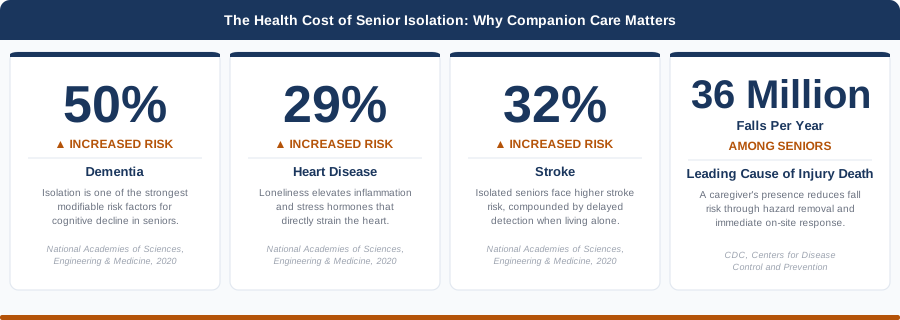
Reducing loneliness and depression is the most direct and well-documented benefit. A 2020 report from the National Academies of Sciences, Engineering, and Medicine found that more than one-third of adults aged 45 and older reported feeling lonely. The health consequences are severe: social isolation is associated with a 50% increased risk of dementia, a 29% increased risk of heart disease, and a 32% increased risk of stroke.
Regular companion care directly targets these risk factors.
Can Companion Care Help Prevent Cognitive Decline?
Cognitive engagement and social interaction are among the most evidence-backed protective factors against dementia onset and progression. The Alzheimer’s Association notes that mentally stimulating activities and robust social engagement may help build cognitive reserve, the brain’s resilience against damage. Waiting until cognitive decline is advanced to introduce companion care means losing some of the most valuable preventive window.
Physical Health, Fall Prevention, and Medication Adherence
Poor nutrition, dehydration, sedentary behavior, and unmanaged chronic stress all worsen when a senior is isolated. Companion care addresses all of these indirectly: through shared mealtimes, gentle encouragement to move, and the stress-buffering effect of social connection.
Falls are the leading cause of injury death among adults 65 and older, with the CDC reporting approximately 36 million falls per year among seniors. A companion caregiver’s presence creates a meaningful layer of safety: they observe hazards, manage clutter, assist with movement, and are present to respond immediately if a fall occurs.
Seniors living alone are also far more likely to miss doses or abandon medication regimens entirely. Consistent reminders from a companion caregiver improve adherence, which in turn improves management of chronic conditions like hypertension, diabetes, and heart disease.
Family Caregiver Relief Is a Core Benefit
More than 47 million unpaid caregivers provide unpaid care to a family member, according to AARP. More than 60% describe the experience as moderately to highly stressful, and a 2025 survey found nearly 8 in 10 report feelings of burnout. When professional companion care is in place, family caregivers sleep better, experience less anxiety, and are more present during the time they do spend with their loved one. This is not a secondary benefit. It is a core outcome.
Who Is In-Home Companion Care Right For?
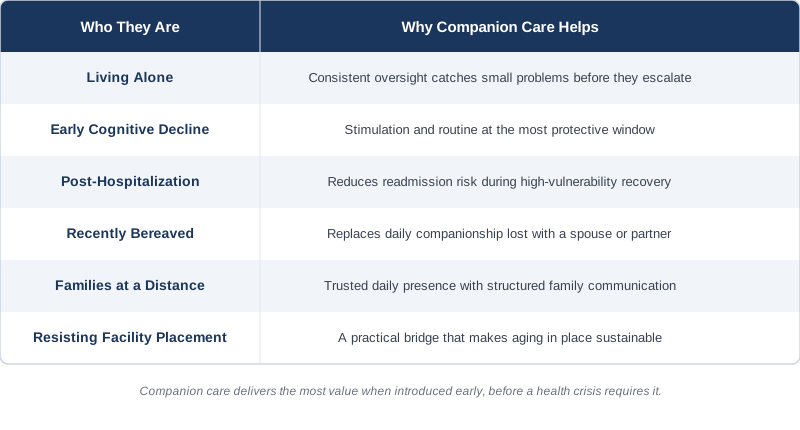
Companion care is not only for seniors in advanced stages of decline. In fact, some of its greatest value is delivered early, before significant health crises emerge. The question is not whether a senior needs help, but whether consistent, professional support could improve their quality of life.
Seniors Living Alone
The combination of daily independence and chronic isolation creates conditions where small problems, a missed meal, a fall, a medication mix-up, can escalate rapidly without anyone present to notice. Companion care introduces consistent, knowledgeable oversight without disrupting independence.
Post-Hospitalization and Recovery Periods
The transition home after surgery, a fall, or an acute illness is statistically one of the highest-risk times for hospital readmission. A companion caregiver during recovery provides supervision, encouragement with rehabilitation exercises, and the practical support that makes the difference between a smooth recovery and a return trip to the emergency room.
Seniors Resisting Facility Placement
Companion care is frequently the practical bridge that makes aging in place genuinely sustainable. With the right level of daily support, many seniors can remain safely and happily at home for years longer than they could without it. Adults with disabilities and chronic conditions, including younger adults managing multiple sclerosis or post-stroke recovery, often benefit from this kind of consistent, non-medical support as well.
How to Choose a Companion Care Provider
Choosing a companion care provider is one of the most consequential decisions a family will make for a loved one. It deserves careful, structured consideration.
Agency vs. Independent Caregiver: What Is the Difference?
Hiring an independent caregiver privately may appear less expensive at first, but it transfers significant legal and administrative responsibilities to the family: employment taxes, workers’ compensation liability, backup coverage when a caregiver is sick, and performance oversight. A licensed agency handles all of these responsibilities and maintains the infrastructure to support consistent, reliable care.
What Should Families Look for in a Companion Care Agency?
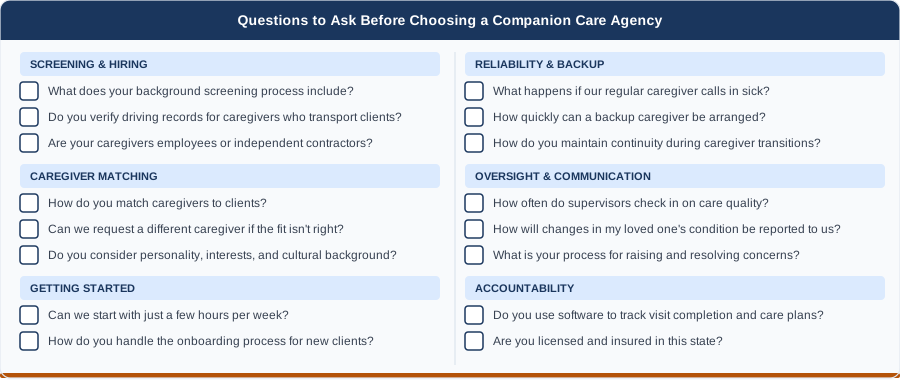
Background screening standards should be a non-negotiable starting point. A reputable agency conducts thorough criminal background checks, verifies employment history and references, reviews driving records for caregivers who will transport clients, and screens for eligibility to work with vulnerable populations.
Caregiver matching is one of the most important factors in whether companion care actually works. The best agencies ask about a senior’s personality, interests, communication style, cultural background, and daily rhythms before recommending a caregiver. This is not a small detail. It is often the deciding factor in whether a senior accepts care.
Backup coverage is a practical test of an agency’s reliability. Every family should ask directly: what happens when our regular caregiver calls in sick? An agency that cannot answer this question confidently may leave families scrambling at exactly the wrong moment.
How Do You Get Started with Companion Care?
Starting small is wise. Beginning with a few hours of companion care per week allows a senior to build comfort with the caregiver and the arrangement before committing to a more intensive schedule. Good agencies expect and support this kind of gradual onboarding.
Supervision and ongoing oversight also matter. Reputable agencies conduct regular supervisory visits, maintain communication with families, and have clear processes for raising and resolving concerns.
Making the Right Choice for a Loved One
In-home companion care does not always get the headlines that medical home care does. It does not come with the urgency of a hospital discharge or the drama of a cognitive crisis. But for millions of older adults and their families, it is the quiet, consistent presence that keeps everything else from unraveling.
The research is clear: isolation damages health in measurable, serious ways. Companion care is one of the most direct and cost-effective interventions families can pursue. Unlike so many elder care decisions, it does not require a medical event to justify it.
The best time to explore companion care is before it feels urgent. Before the warning signs become a crisis. Before isolation has had years to do its quiet damage.
For seniors who are managing well but living alone, for those who have recently lost a spouse, for those whose families are stretched thin by geography and life demands: companion care offers a practical, meaningful, and often life-extending form of support.
If you are caring for an aging parent or loved one and would like to learn more about how professional in-home companion care might help, B’zoe Care offers personalized companion care services with carefully matched, state-certified caregivers. Reach out to our team to learn how we can support your family.